Friday, April 5, 2013

THREE CAKES, TWO DAYS, PART ONE: Chicago

Opportunities for spitcake tourism are few and far between, so three cakes in two days is something special. Maybe a record! Definitely a record for "hardest trip to explain to my roommates."

My last day in Chicago, at the height of summer, was my day to get spitcakes with my copilot (who is also named Sam). I knew that Chi-tonw was home to Lutz Café, up by Horner Park, and Racine in the Polish-Lithuanian southwest side.


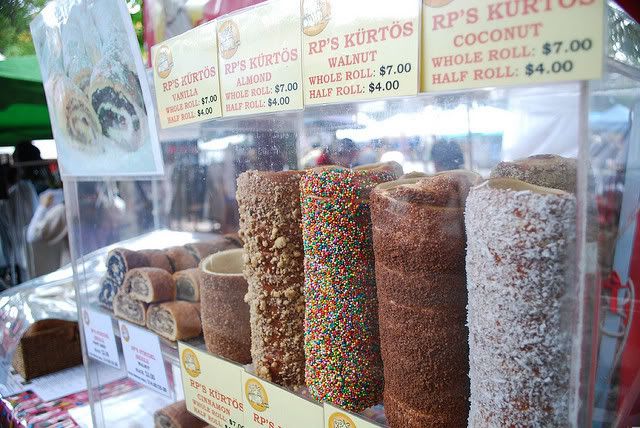
The display of Lutz baumkuchen available to-go.


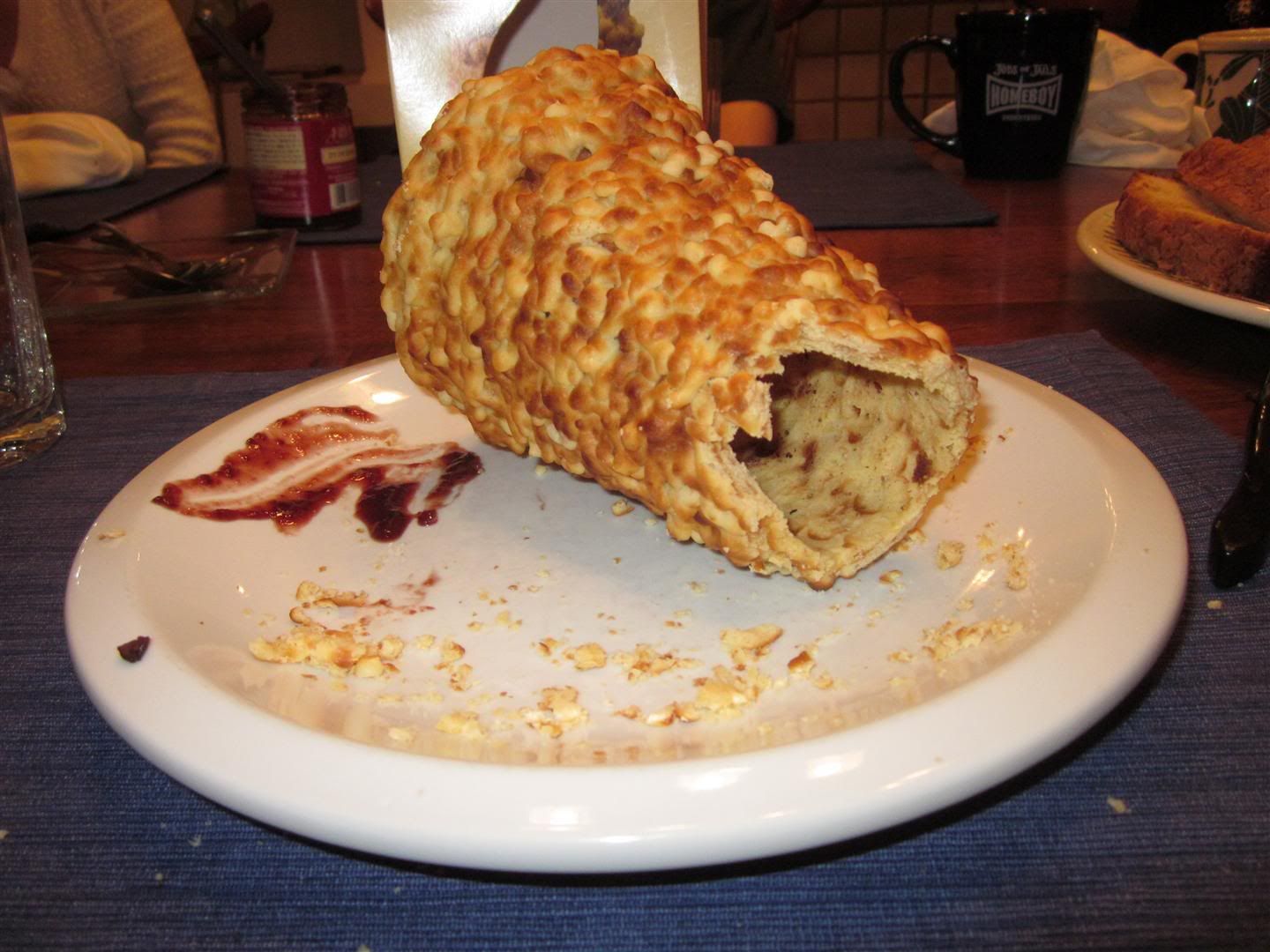
Racine šakotis/raguolis in its protective plastic wrap.


Lutz Café, which offers baumkuchen, is very much a restaurant and tea room. Racine is rather a specialty supermarket which happens to have šakotis (which they call raguolis, equally valid). Both places bake their cakes on-site, though only Lutz has the option of eating it there. Most are packaged up and sold just like a mass-produced confection. This seemed unjust to me, but I didn't have much time to dwell on it. Sam and I splurged on cakes, loaded them into a cooler, and early next morning set off for a little hamlet in Ohio, to meet a man who needs no introduction...

It is abundantly clear that my time management skills are poor

NINE MONTHS AGO, I engaged in a trans-America roadtrip with several stops just for spitcakes. I'm going to split this story into several posts, but they are going to go up THIS WEEKEND.

Wednesday, May 16, 2012

Spitcake + Fruitcake = Spurftcake

There's an old medieval recipe for trayne roste at Historic Food dot Com! It strikes me as a hybrid spitcake, in that it's prepared a bit like baumkuchen and a bit like chimney cakes. A prepared stripe is wrapped around a spit, like chimney cakes (though here the stripe is made of fruits and nuts, not yeast cake). Then batter is dribbled onto the cake while it turns by a fire, like baumkuchen!

Historic Food claims the trayne roste is a direct ancestor of the gâteau à la broche, which is neat if it's true. Blanched almonds and dried nuts are threaded on a thread as long as a man is tall. That gets coiled around the spit and drizzled with a batter made of flour, wine or ale, ginger, sugar, saffron, cloves, salt, and other spices. AND THAT'S HOW YOU TRAYNE ROSTE.


A trayne roste, nearly done. [source]


Slices showing the cake anatomy. [ibid.]

Monday, May 14, 2012

I am conflicted about posting this recipe

I don't really like the taste of black pepper. That said, Bravo TV posted this recipe, so I'm sharing it with you!
Black Pepper Baumkuchen
  • 200 grams butter
  • 150 grams sugar
  • 2 grams salt
  • 2 grams vanilla extract
  • Zest of 1 lemon
  • 1 teaspoon black pepper, ground
  • 80 grams yolks
  • 210 grams whites
  • 150 grams sugar
  • 175 grams cornstarch
  • 65 grams almond meal
  1. Cream 1st four ingredients, beat in yolks.
  2. Make meringue, fold in cornstarch.
  3. Fold in dry and meringue alternating.
Nice job, chef Morgan Wilson!

I Did Eat Some Gâteaux à la Broche

I'll never outgrow this cakeblog. I will return to it every so often! However, I will find other things to do for years on end.
FIFTY-THREE WEEKS AGO, I ate a gâteau à la broche. Fifty-two weeks ago, I ate a second one, from a different place. And yet I am only getting around to discussing them now! To quote a fellow Mudd alumnus, "I am grossly incompetent."
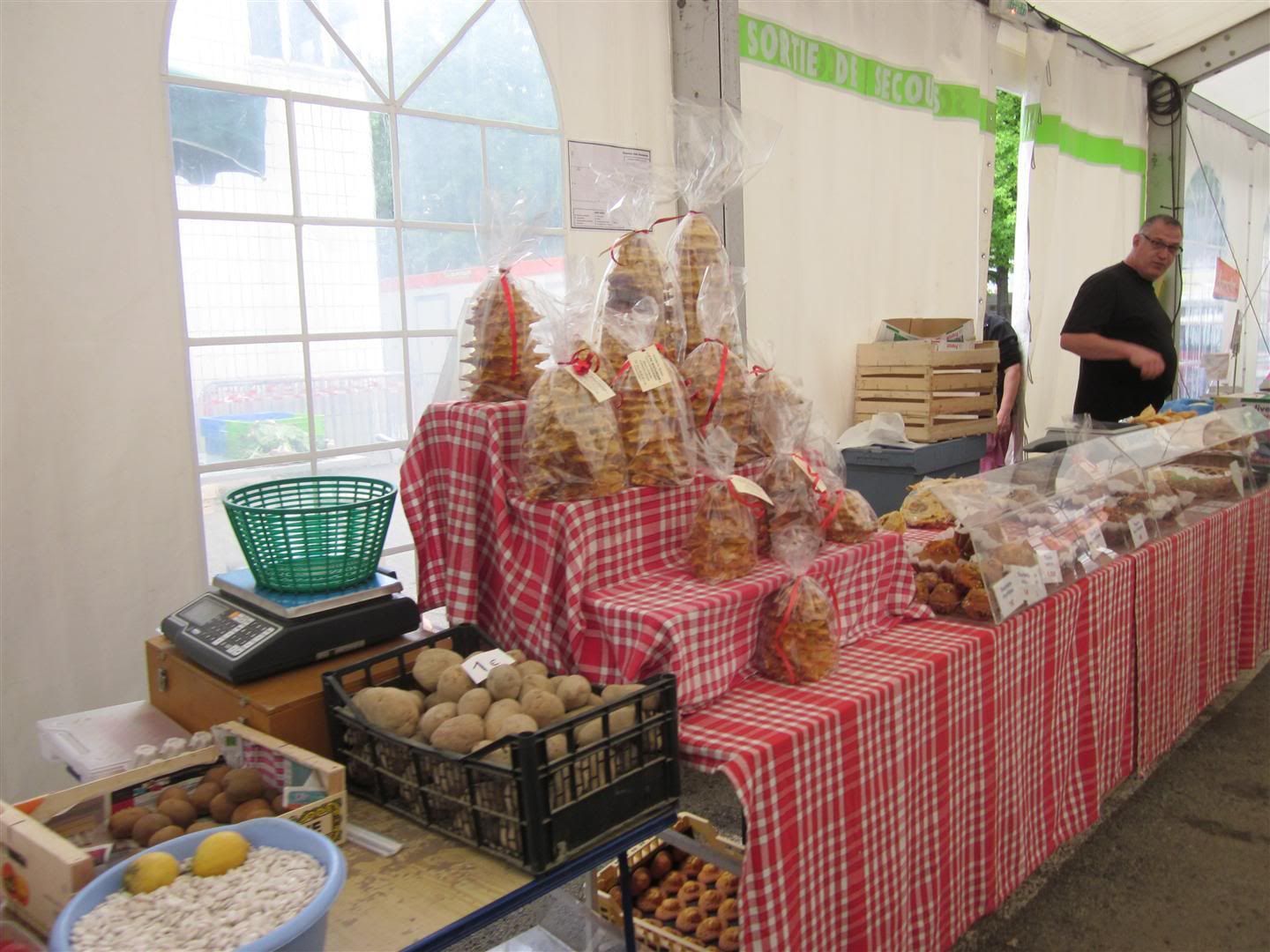
It was a pretty fantastic weekend, a year ago. I am still a little ashamed to admit that I scheduled twenty hours of bus and train rides so I could spend eighteen hours in a little Pyrenean hamlet. It was around six in the morning when I reached Tarbes, pronounced "tau(gurgle)b". When the daily food market opened, I was there, and ready to get some spitcake!

No better way to start my day!


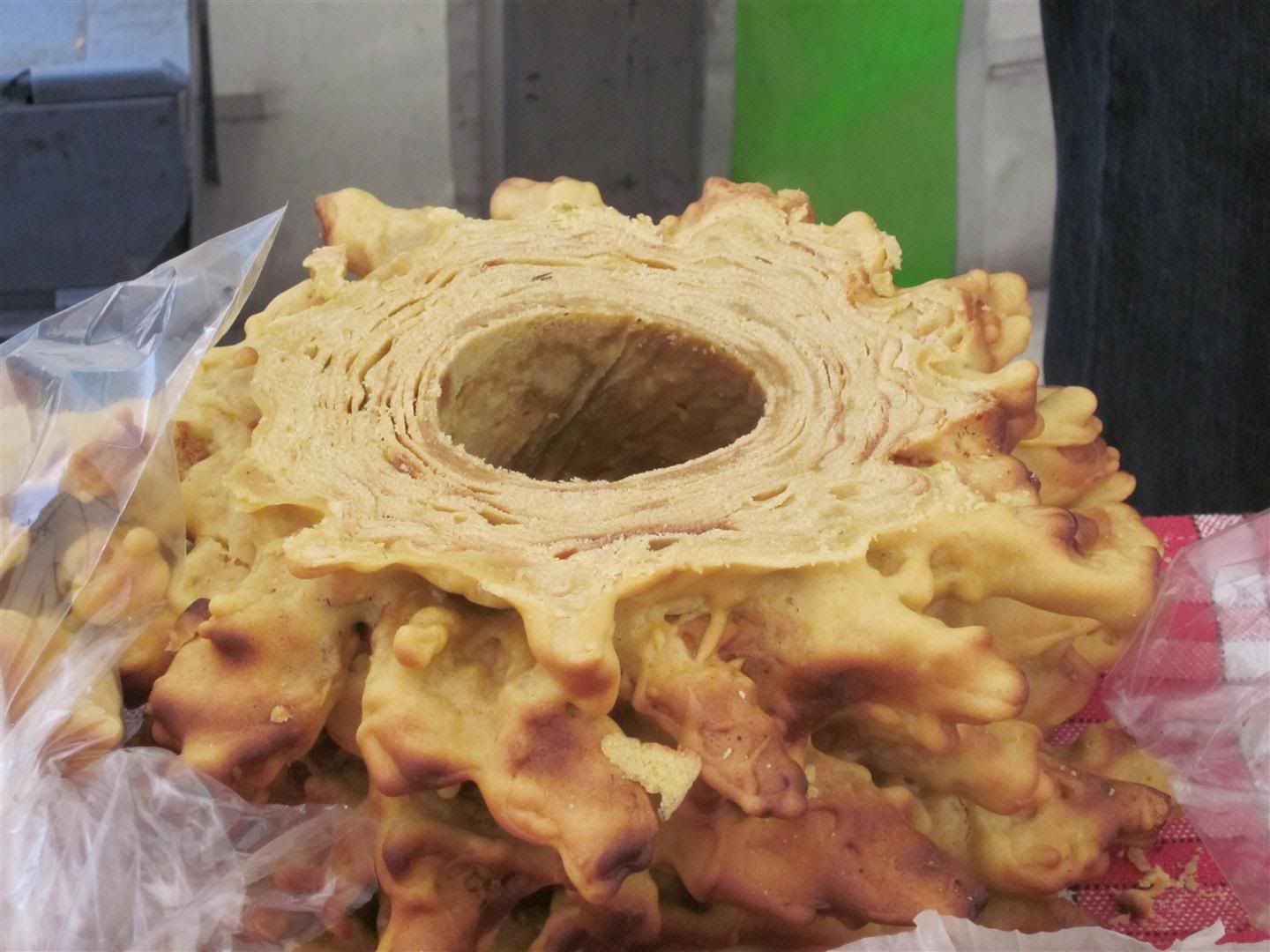
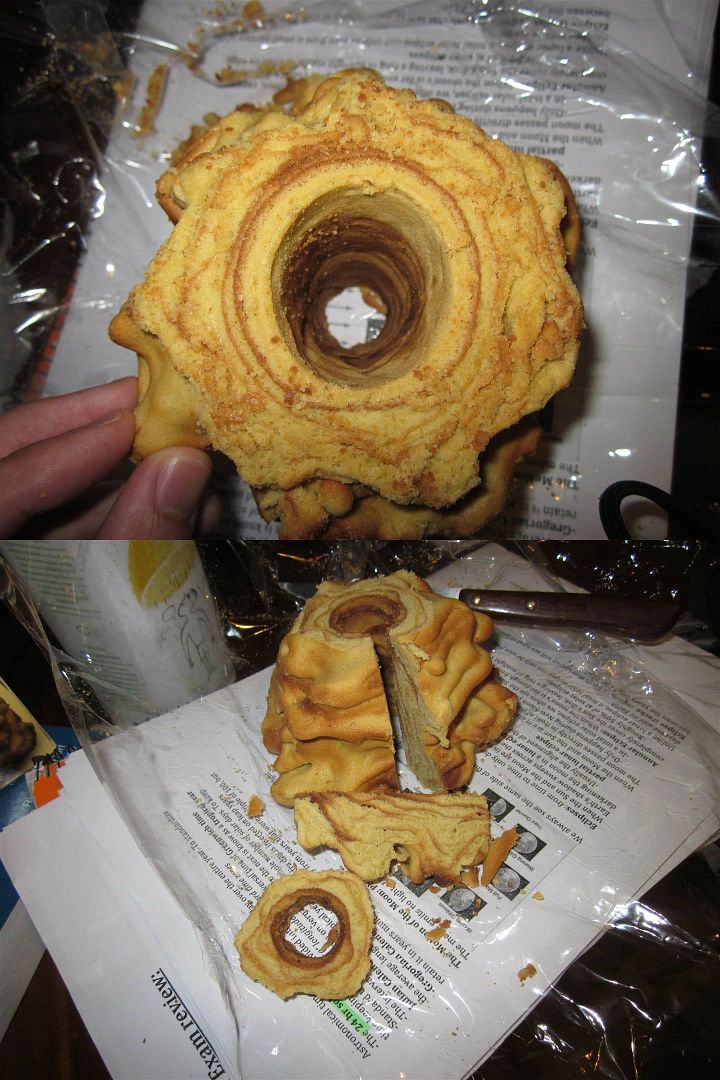
Cross-section of the cake the patissier was free-sampling off of.


The above pictures show cakes from Le Pic Bigourdan, which as far as I can tell is an enterprise that only sells through these farmers markets. Anyway, look at that cross-section! It belies the irregularity of this type of spitcake. The dribbled batter doesn't make coherent layers. Not in this bakery's cakes, at least...
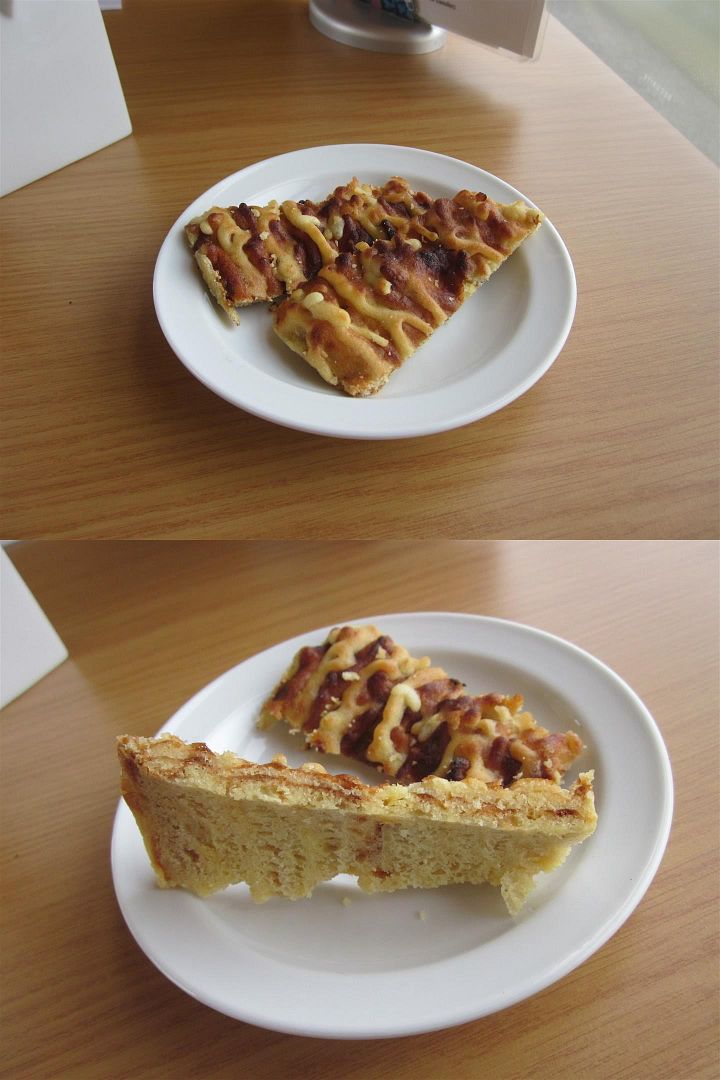
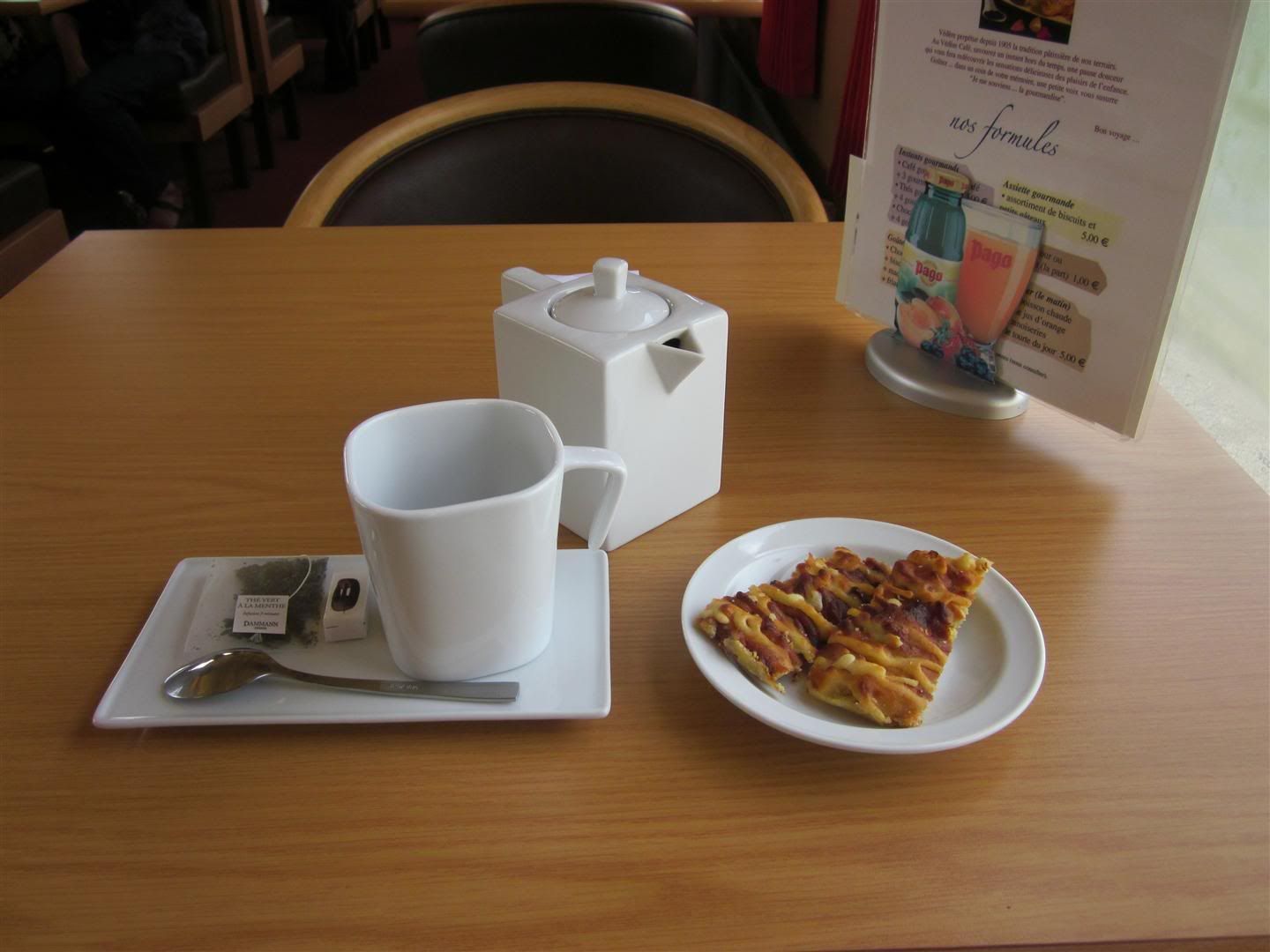
I bought a small cake from Le Pic Bigourdan and carried on. After some misdirection and a delightful run-in with an Esperantist, I reached the Védère Café in Montgaillard, which I mentioned in my previous gâteau post! Before buying another cake, I tried a slice in their dining-car-turned-café.

Salivating.


I was surprised to see a spitcake sliced into quadrangles rather than rings! Their website shows gâteaux sliced into rings, so I can't tell which is the norm for this region and which is avant-garde presentation. And wow, I thought that other bakery's cakes had irregular layering! This is so unlike baumkuchen! What a wonderful, diverse spitcake universe exists!
I bought a cake from Védère, got smashed on some phenomenal local beers, and miraculously awoke at home in Madrid. Over the next couple of weeks, I tore down those two spitcakes with the help of friends and family.

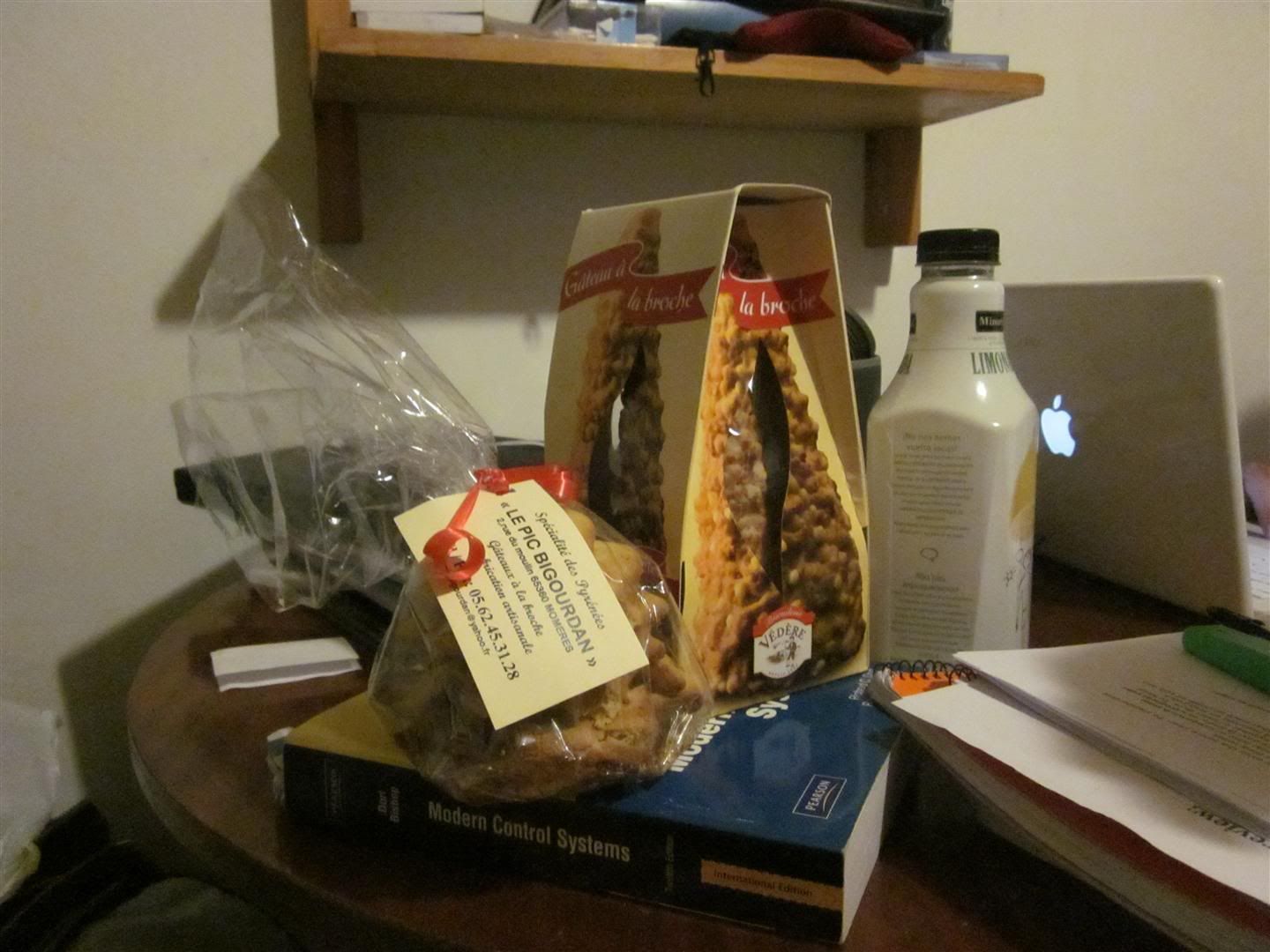
Spitcakes, pre-teardown.


My cake from Le Pic Bigourdan.


My cake from Le Pic Bigourdan was very hearty, not too sweet, with vanilla and an indistinct liqueur flavoring. I love the appearance of the cross section.

My cake from Biscuiterie Védère.


My cake from Védère was surprisingly moist, considering how thin the cake was. A strong taste of rum and eggs, and a great texture. I wish the cake were thicker, but I don't know how that would alter its good qualities.
* * *
I chose Tarbes and Montgaillard because internet research promised I could try two cakes in one outing. Having actually gone to the area, I discovered I likely could have gotten gâteaux from the town of Pau, or Lourdes, or Lannemezan, or probably any of the towns with markets (read: ALL OF THEM).

Closing this post with a pretty scene!


Wednesday, March 30, 2011

Le Gâteau à la Broche

Every so often, I go back to the Wikipedia pages on spitcakes for various reasons. On the šakotis page, I saw the following new addition to the page: "In France, it is known as gâteau à la broche and is mostly found in the Massif Central and Pyrenees, especially in Aveyron where it is a very popular party dessert."

Gâteau à la broche? A French take on a Lithuanian cake? I'd never heard of such a thing! So I got on my trusty Internet machine and off I went. I found a fair amount of basic information right away, but a lot of details are still elusive. For example, why did I not know about this sooner? Where is the closest place where I can obtain this pastry? Anyway, here's what I do know:

Gâteau à la broche is native to the French half of the Pyrenees, though it is also made in some isolated parts of central France and a little squirt of Basque country. Like its cousins in the spitcake family, it was traditionally made only for extra-special occasions, like when rich people get married. Also like its cousins, it has become available outside of rich people's weddings—although as far as I can tell, in the case of gâteau à la broche, its reach has only extended to a handful of farmer's markets in tiny towns that are practically inaccessible without a car. That's not a huge deterrent, though. I can hitch-hike. I think I could feasibly obtain one of these!


Gâteaux for sale! [source]


A cut-away section. Much more irregular layering. [ibid.]


How it's made! See the resemblance to the Lithuanian version? [source]


A giant cake that also shows a resemblence to the Lithuanian version. [source]


A cake even bigger than the giant šakotis! I'm looking for more info, but so far I've got nothing. Also, a stuffed tiger. [source]

Saturday, March 12, 2011

Chimney Cake

Did I mention that I'm in Spain right now? I don't think I did. Anyway, that's where I am this semester, which opens some new cake-related doors.

Well, in February I went to Budapest, home to its very own spitcake called kürtőskalács, or "chimney cake." It's quite unlike baumkuchen and šakotis! Instead of layers of batter, it's made by rolling out a long, thin strip of sweet dough (kürtőskalács is a yeast cake). This gets wound onto a conical form, so you get a nice tapered tube. The dough is dusted with sugar and stuck in a special kürtőskalács oven, which spins multiple individual cakes, each on its own spindle. The result is a sweet, dense, bready pastry with a thin crispy shell of tasty burnt sugar. When it's taken off of the conical form, the cake can stand upright, fragrant steam pouring out the top, leaving no doubt how it got its name. While still hot, there's the option of dusting the cake with a topping of your choice—traditionally, walnuts or more sugar, but other options include cocoa powder, cinnamon, dried coconut, or vanilla. Some places even make savory kürtőskalács, topping them with meats and cheeses and savory herbs and spices!

And it's cheap, too! In Budapest's Nyugati Pályaudvar, there's a shop that sells nothing but chimney cake at 380 forint (1.90 USD).


A modern kürtőskalács oven. [source]


A more traditional way of baking chimney cake. But not too traditional; observe the axle motors on the back wall of the grill. Also, notice the helical structure from the way the dough is coiled. [source]


Baked and flavored cakes! Oh lordy, that looks good. [source]