I'm learning lots of cake history from Kurtos dot EU! I've been focusing my efforts for now on two old recipes. This one is from 1582 and supposedly describes the first layered spitcake (i.e., the first tree cake). A second one (whose transcription/translation I haven't put online yet) is from 1769, containing the first "modern" baumkuchen recipe. I'm not sure what "modern" means in that context, but that's the description used by Fritz Hahn. Fritz Hahn, by the way, was a baumkuchen historian who did a ton of very useful research in the 1960s and cited his sources very well. Me discovering him is the reason why I've suddenly switched to paleography and historical fact-finding.
Monday, June 22, 2015

Friday, June 12, 2015
Mimi Sheraton's article is back online
Mimi Sheraton wrote an article for The New Yorker back in '09. It was paywall-blocked for a while, but it's free for all now. Check it out!.
I have one big problem with this online version! It is missing the delightful page-two photo by Hans Gissinger! So naturally I had to dig through my Baumkuchen Journalism Briefcase (yup, I have a Baumkuchen Journalism Briefcase!) and scan it in. Here you go!

Sunday, June 7, 2015
New cake machine .gif
Here is an updated version of the digital cake machine from earlier. Enjoy!
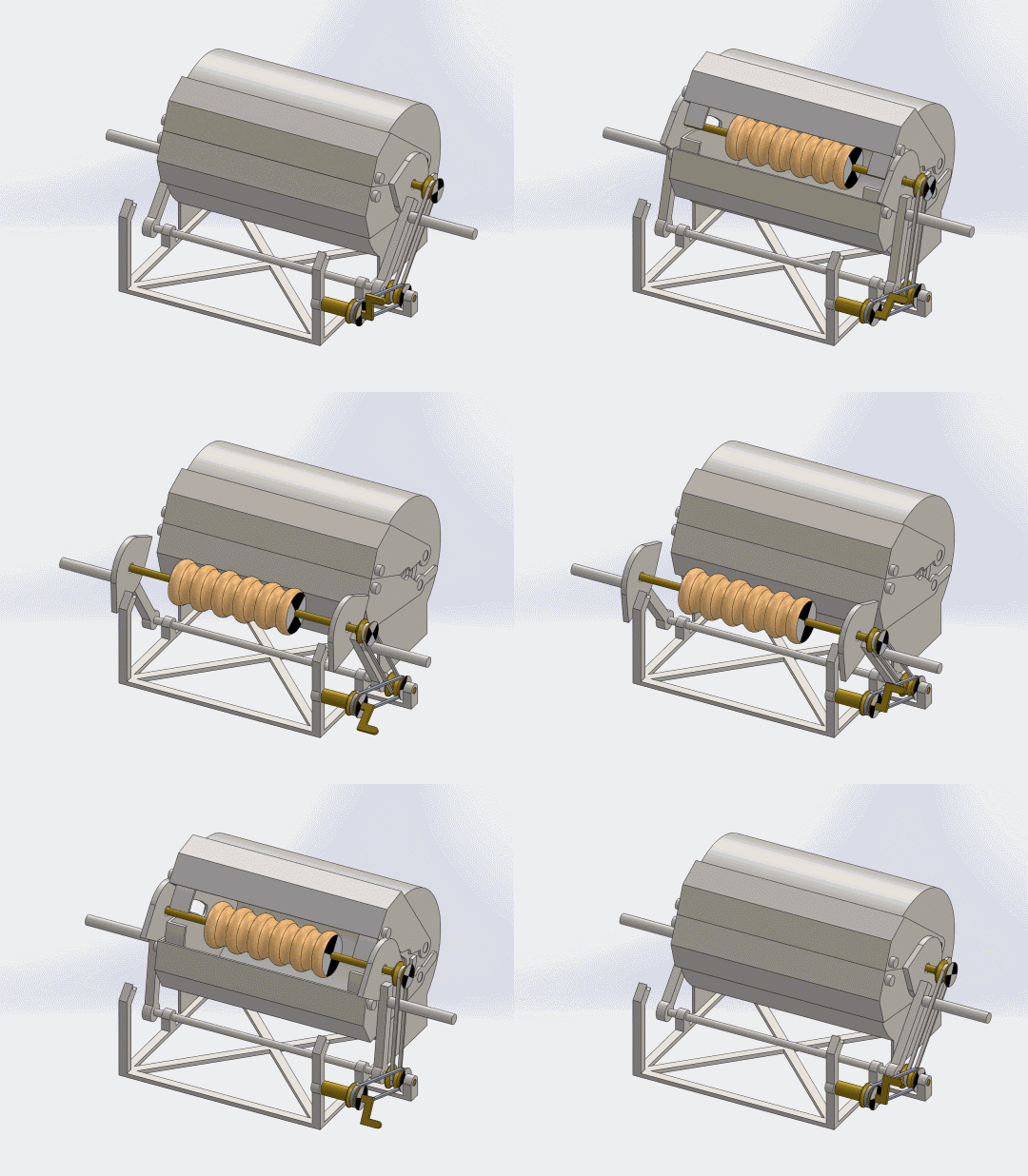 Technical details: It's a 1:6 scale design that I'm printing on my Průša i3 printer. The pulleys (gold) are connected by rubber bands, so by turning that crank you can spin the cake whether it's inside or out of the oven. The long handlebars let the user slide the cake in or out. The cams on either side of the cake (the things that look like Darth Vader's helmet) hit the little nubs on the oven doors, forcing them open only when necessary—thus minimizing heat loss.
Saturday, June 6, 2015
May, 2015: Two Cakes for the Record Books
I've written about a couple big tree cakes before ([1], [2]), and often wondered if there's a governing body for claimants to the title of "largest tree cake." Well, according to various Lithuanian news sources, there may be a definitive champion, as of May 30 this year.
Do you see that mother of all cakes? It's 3.7 meters long and weighs 86 kilograms (not including the rotisserie)! Lrytas.lt reports that the batter was made with 49 kg sugar, 63 kg flour, 43 kg of various lipids, and 1700 eggs. Seventeen hundred eggs.
That same article reports that the bakers actually made TWO mega-šakočių. To qualify for the Guinness Book of World Records, the šakotis had to be cut up and eaten. But the Šakotis Museum wanted it as a trophy, too! So, naturally, that meant baking another 3.7-meter cake, and magically resisting the temptation to eat it.
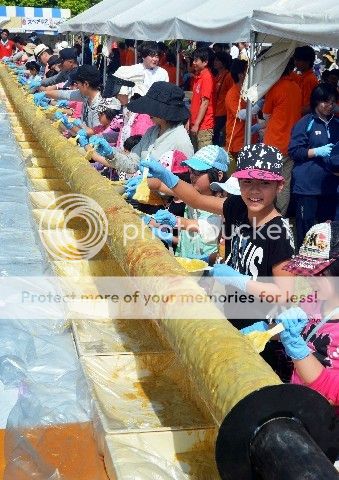
So, that cake will soon show up as the Guinness Book's largest tree cake. But what about the longest tree cake? That separate record goes to the Japanese village of Chizuken. On May 10th this year, 880 volunteers prepared a baumkuchen that was 16.480 meters long. That's three giraffes, plus a guinea pig. They had originally been building a 20.327-meter cake, but part of it sheared off—a common baumkuchen disaster. Still, it was enough to break the previous record (14.654 meters, also made in Chizuken). And, like one of the giant šakotis from Lithuania, it all got eaten by volunteers. Tastes like victory.
Saturday, February 7, 2015
I could have sworn I posted this gif
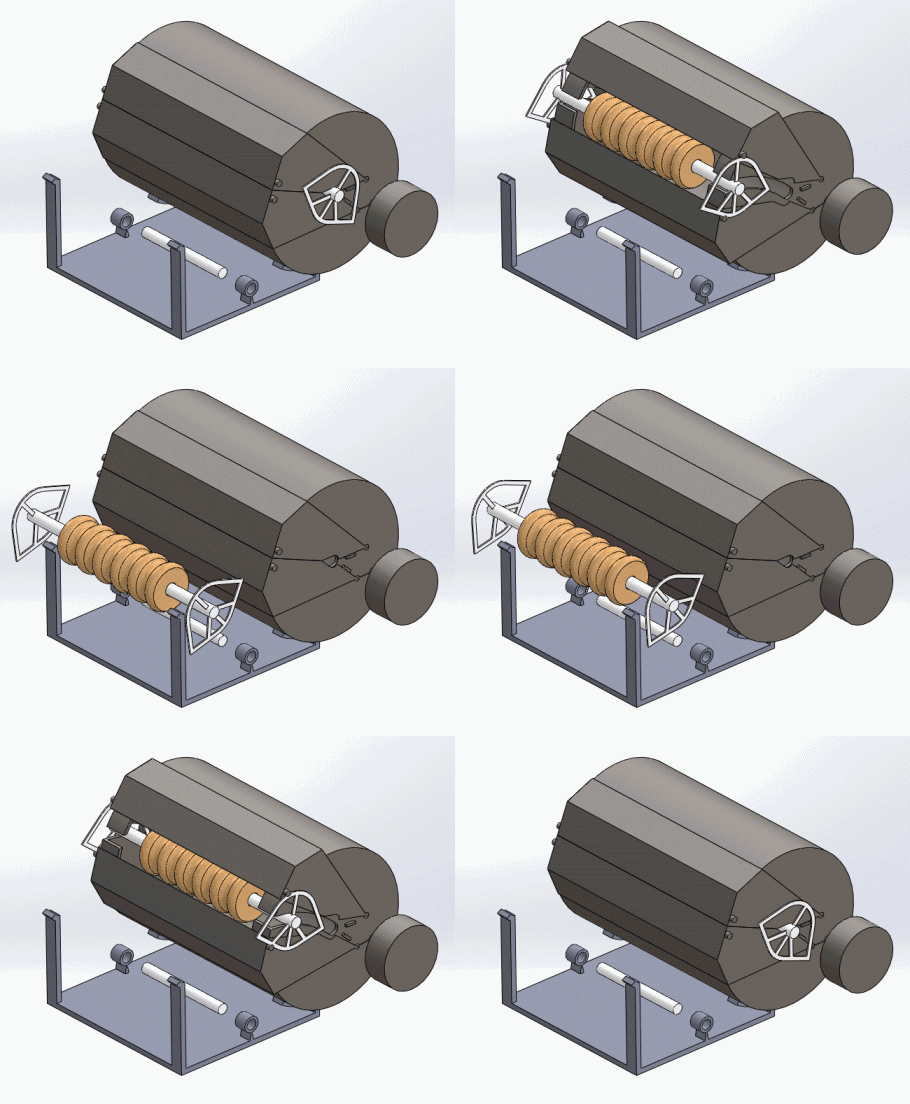
I made a fun cake machine gif and then forgot to post it?? What a terrible oversight.
OM NOM NOM
Tuesday, September 2, 2014
The rotisserie cake family!

Hello, can I be adopted by this family please?
I just learned about THIS WONDERFUL WEBSITE, which is primarily about chimney cake but embraces all the members of the cake-on-a-spit family. There's an insane amount of information here, and the documentation page has all the resources one could ever hope to acquire. This is wonderful, because I am busy populating my own website with very similar information. I feel one step closer to a proper communications network for rotisserie cake enthusiasts.
Tuesday, August 19, 2014
What's new at Glaze?
Since my May tour of Glaze Baum Cakes, the team has pulled off a successful opening and merger with the trendy Japanese restaurant, Sasa. Amanda and Zach are still running the dessert show, and despite the cramped kitchen space they are working wonders. Seasonal flavors right now include more varied citrus, and they are bracing themselves for autumn and the inevitable rush on pumpkin spice baum cakes.
Pastry experimentation continues to pay off, too! During my May visit, the bakers lamented that the matcha baum cake had such a high failure rate, shearing apart with little or no warning. After diagnosing that the matcha powder was interfering with the whipped egg whites' ability to keep the cake solid, they began to tweak. Adding more egg whites affected the flavor too heavily. Putting the whites in un-whipped kept the cake from collapsing, but it ruined the smooth texture (effectively turning the batter into sandkuchen batter). Eventually they found a ratio of some whipped egg whites and some non-whipped whites that boosted their cake output and preserved the texture we've come to know and love! Is there a Fields Medal for cake science?
Aside: Sasa offers shredded mountain yam as a side dish. Fans of the literary genius Ryūnosuke Akutagawa may want to check it out, since this non-Newtonian pintxo is the crux of his 1916 short story, "Yam Gruel".
Subscribe to:
Posts (Atom)
